
TIL #124: Do You Know Why I Pulled You Over?
Kimi can't be stopped. Monaco should be stopped.


The Installation Lap is a weekly Substack column dedicated to helping Americans develop a deeper appreciation for Formula 1.

Well, there’s no getting around it now. This is Kimi Antonelli’s world, and we are all just living in it. That’s five race wins in a row for the young Italian. That matches Lewis Hamilton’s personal all-time consecutive race win total. Lewis has won five in a row twice in his career. The damning thing here for Lewis, who is now second in the driver’s championship, and for everybody else in F1 at the moment, is that Formula 1’s historical statistics now look like a building collapsing on everyone else’s hopes and dreams for the 2026 season. Anyone who has ever won this much, this quickly, has become world champion. No exceptions.
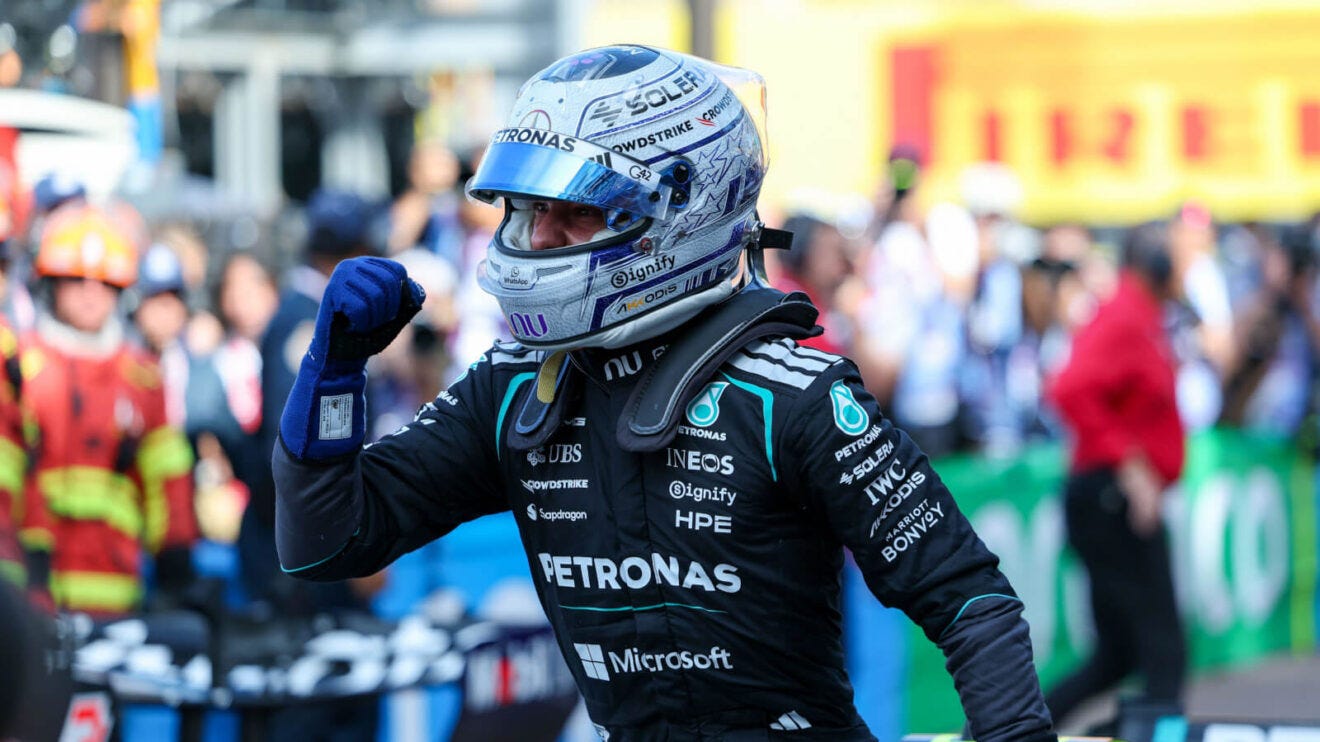
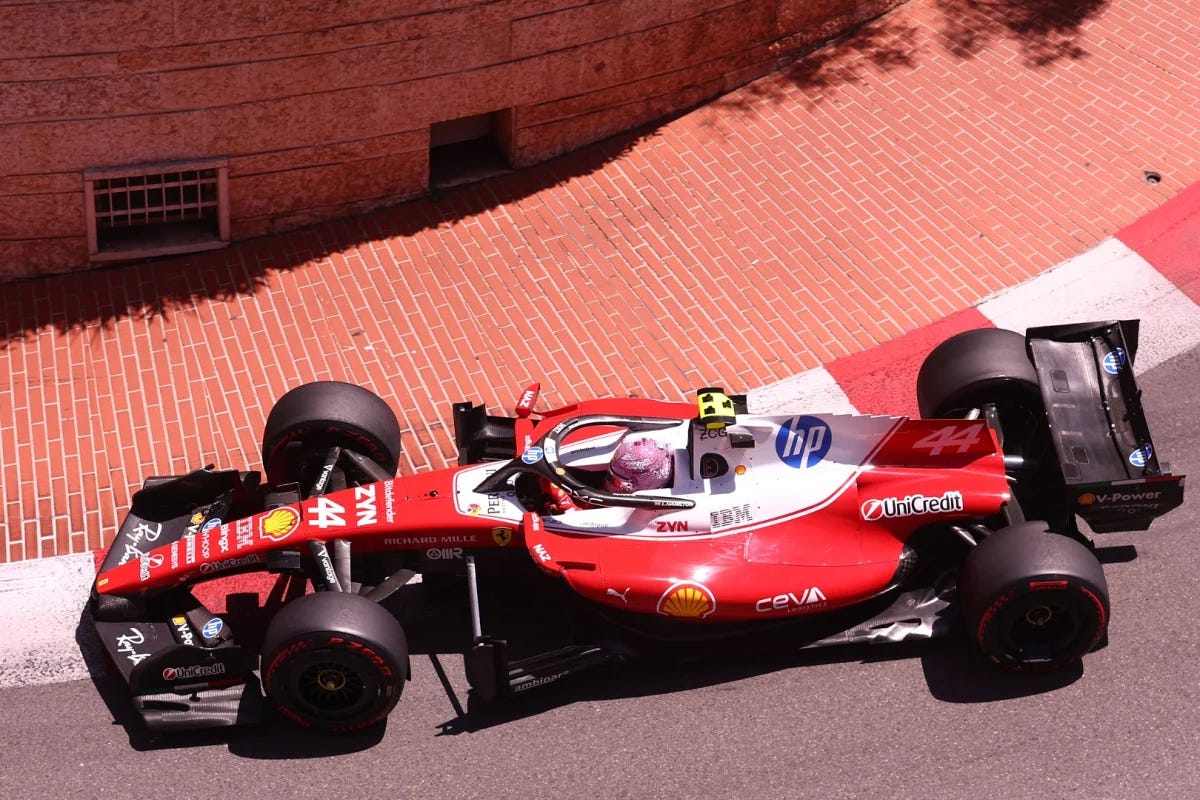
There is now only one thing left for Kimi Antonelli to prove. He’s brilliantly fast, tough and wild in wheel-to-wheel racing, dominant when it’s day, and now more than ever the runaway championship leader. This run of form is incredible and very reminiscent of Lewis Hamilton arriving on the grid in 2007. The difference being that Lewis was a rookie in ’07 and Kimi is in his second season. All that remains is to see how Kimi responds when this insane winning streak ends. This season will undoubtedly take a turn as teams work furiously to bring updates and, as we saw last year, driver form isn’t static. It fluctuates. Ferrari have been threatening to win races and will almost certainly get lucky at the very least; at best, there could be another track favorable to Ferrari, like the Hungaroring. Although Monaco was supposed to favor Ferrari, wasn’t it? It looked like that was true after FP1 and FP2, but Ferrari faded in qualifying and in the race.
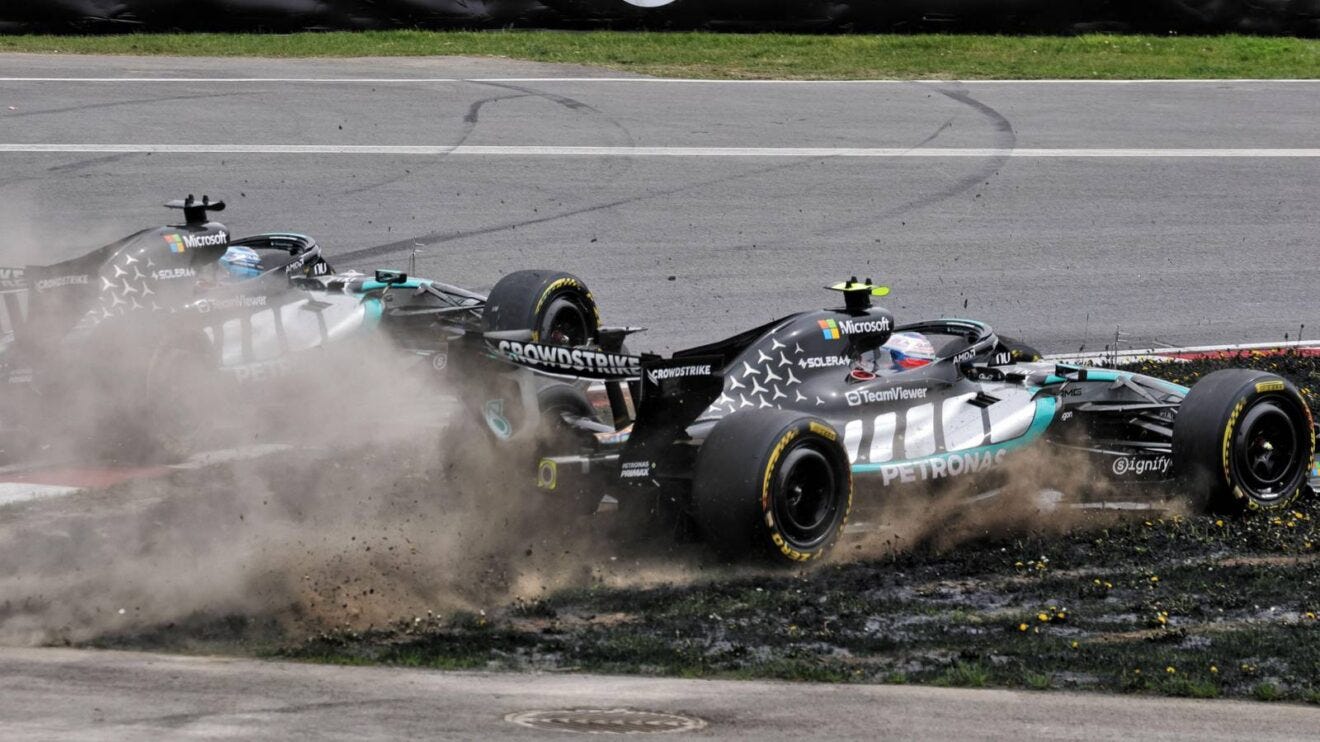
McLaren and Red Bull look capable of winning races if we hit on a track and/or a set of conditions that favor their cars. Finally, the specter of George and Kimi taking one another out has not yet passed. An incident like that could certainly open the door for someone else to win this year, and the circumstances of this potential crash could show us what Kimi is like when the chips are down.
There’s a lot of luck and maybe’s, therefore’s and perhaps’s in there. Still, even if Kimi is crowned champion at the end of the year, or sooner at this rate, there will definitely be weekends when things just don’t go his way. I’m curious to see how this new superstar responds in those moments.
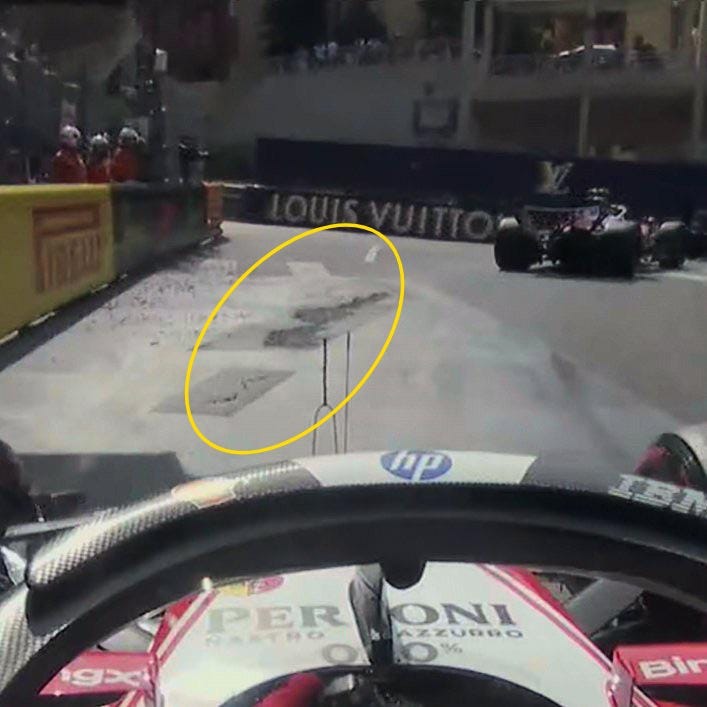
As for the Monaco Grand Prix…Mamma mia. It’s time, gang. Let’s all put our hands on the knife and kill this farce of a Grand Prix. Monaco was exciting this year because of all that went wrong. No wheel-to-wheel racing, no epic overtakes, and no drivers pushing one another to the limit made that race interesting. And we were robbed of seeing if Max could have done anything about Kimi’s otherworldly pace. Monaco was exciting this year because everyone was suddenly and inexplicably getting dinged for speeding in the pit lane and because the track was coming apart. It was a raft of penalties that allowed cars to move up and down the order, not engineering prowess. Not driver skill. Penalties and negligence made this year’s “race” a lively one. Monaco has hosted Formula 1 for 72 years. Since the beginning in 1950. Why, after 72 years, was paving a road for the Grand Prix suddenly an issue?
We wrestle with these Monaco emotions every year. Most years we are able to talk ourselves down from the ledge. Yes, defense is just as important a skill as attack. And a great defense in Monaco can be thrilling. I’m thinking here of Max breathing down Lewis Hamilton’s gearbox for dozens of laps in 2019 while Lewis, on completely dead tires, held Max off for his mega “Nikki Lauda win.” Or Daniel Ricciardo’s epic “now power” Monaco win in 2018. But highs like that are no longer enough after so many years of absolutely underwhelming, processional races.
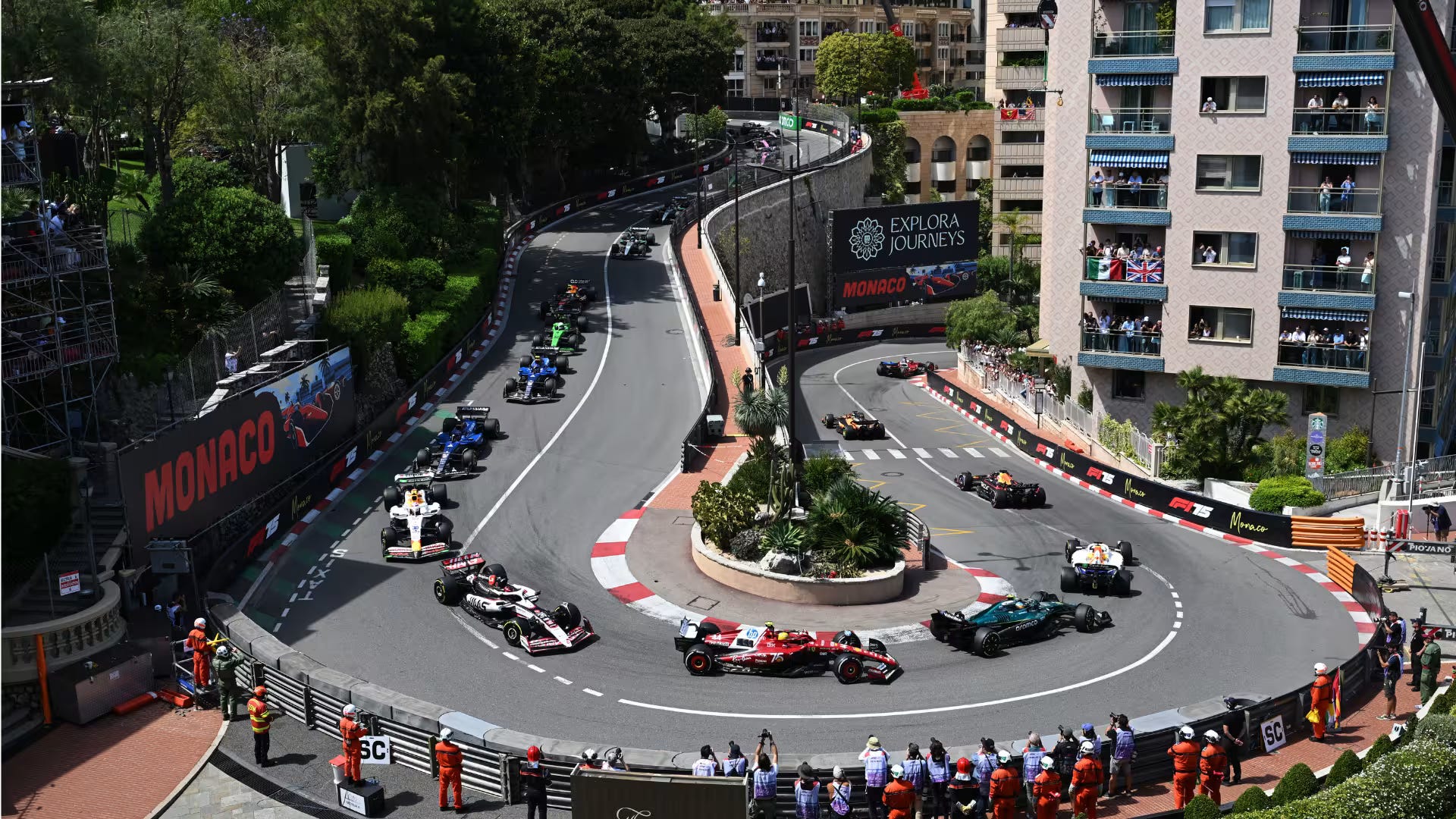
We have also sometimes been seduced by the argument that each track is its own unique challenge, and, much like a long decathlon, an F1 season throws up a variety of challenges for cars and drivers. Over the course of navigating 20+ different challenges per year, a champion emerges. In the past we’ve found that argument pretty persuasive. In Monaco, qualifying is the main event, and indeed, it does dazzle more regularly than the races. But, enough is enough. Let’s just stop pretending. F1 must either build cars that can race around Monaco or ditch the principality as a race venue.
Bring the cars to Monaco for a combined launch and pre-season testing event in January. Or run a Monaco Grand Prix qualifying event like Major League Baseball’s All-Star Game. Just after Spa, in the first week of the summer break, put the entire F2 grid into F1 cars and let them do a big qualifying event. There are plenty of ways to keep Monaco part of F1 without subjecting us to this make-believe Grand Prix every year.
Monaco has to go.
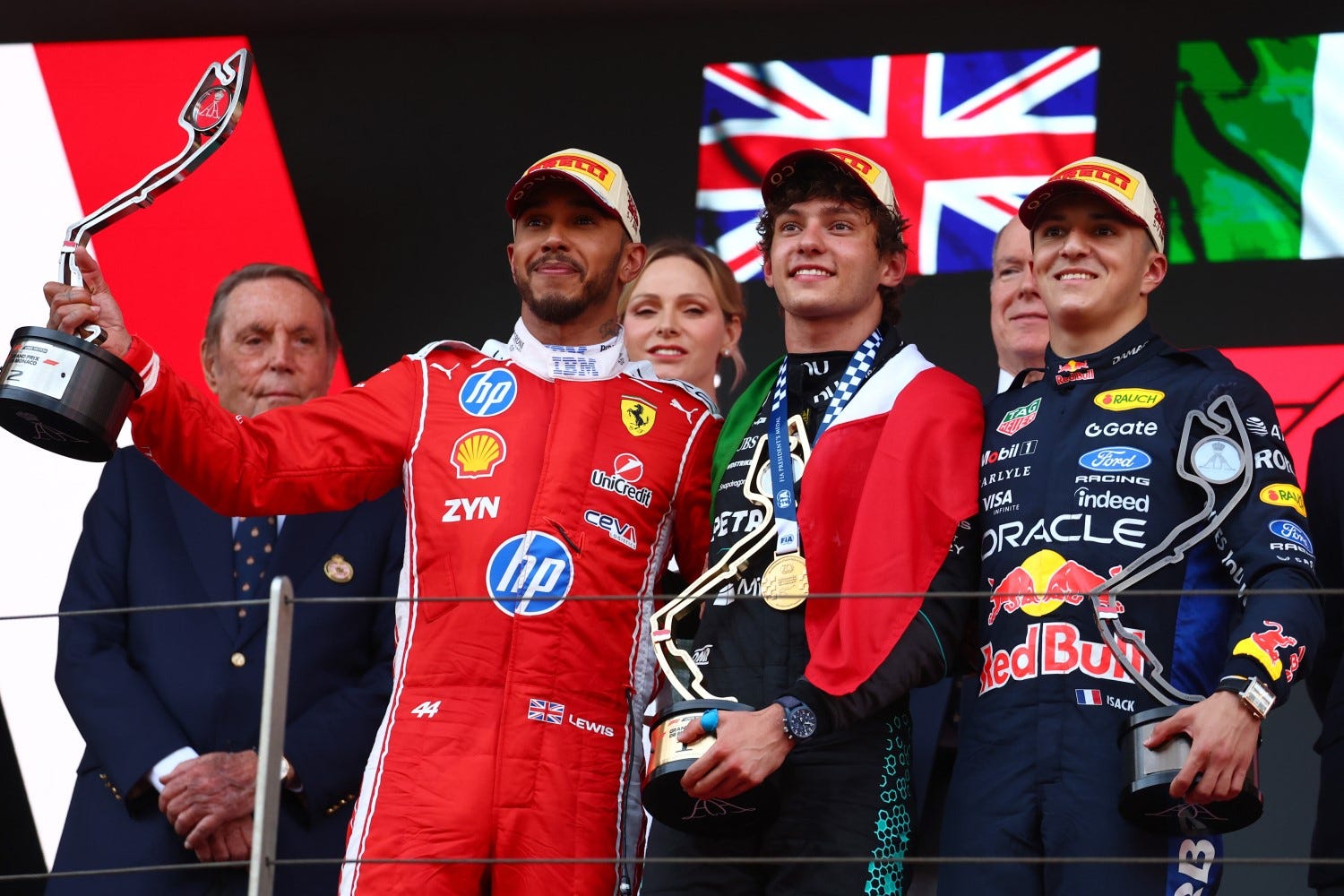
With penalties inserting themselves as the main catalyst of drama this year, there were some winners and almost winners. Lewis Hamilton slipped the noose on a 5-second penalty for speeding in the pit lane to record a second consecutive P2 for Ferrari. That was a good day for Lewis.
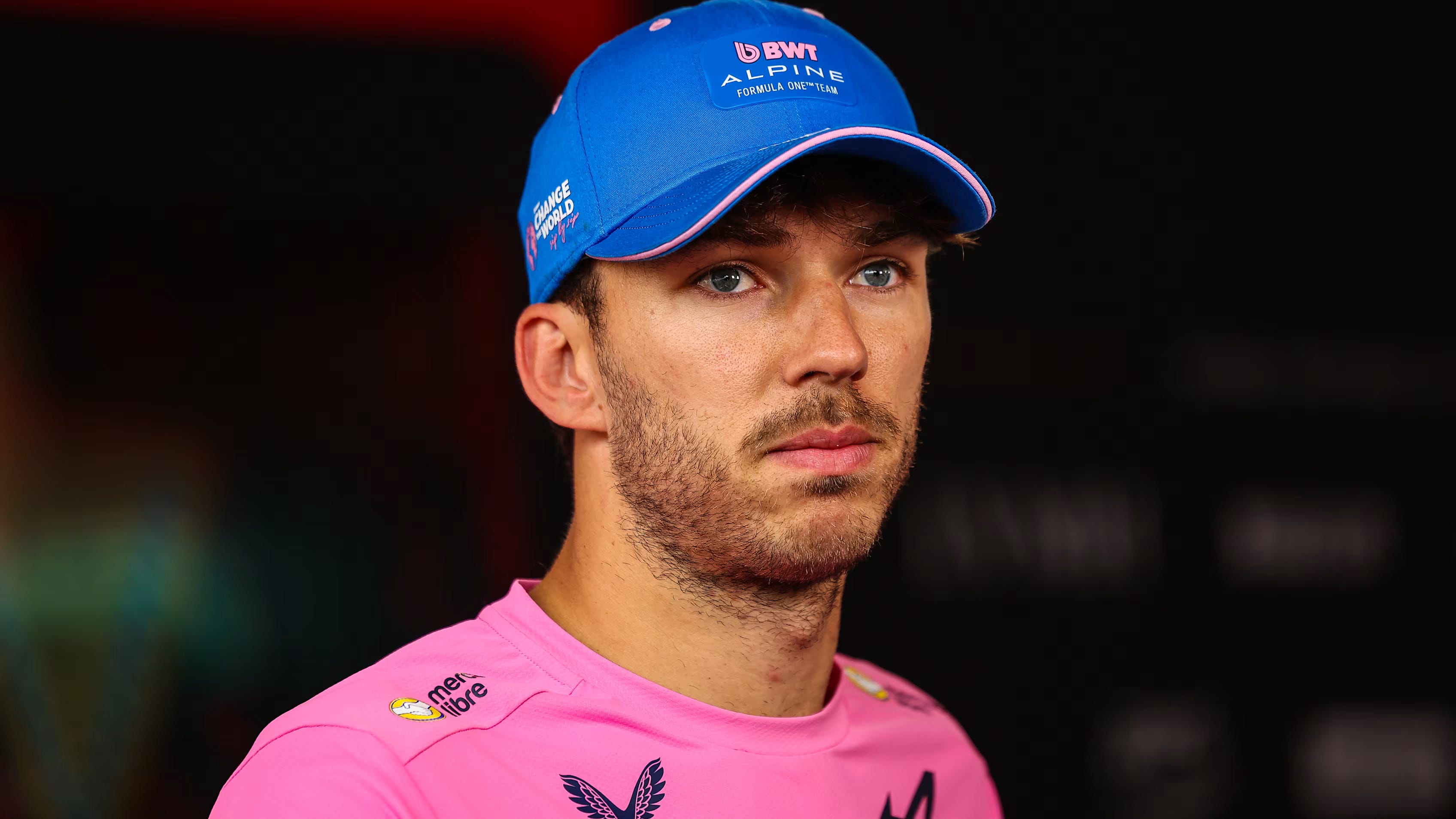
Pierre Gasly was almost a winner in the penalty game as he crossed the line 3rd on the road only to be demoted to P7 after penalties were applied. Pierre was “heartbroken” after the race, but Alpine has continued their points-scoring streak. I felt for Gasly; a podium would have really ignited this Alpine-on-the-rise story we’ve been following. Still, it could have been a lot worse than P7.
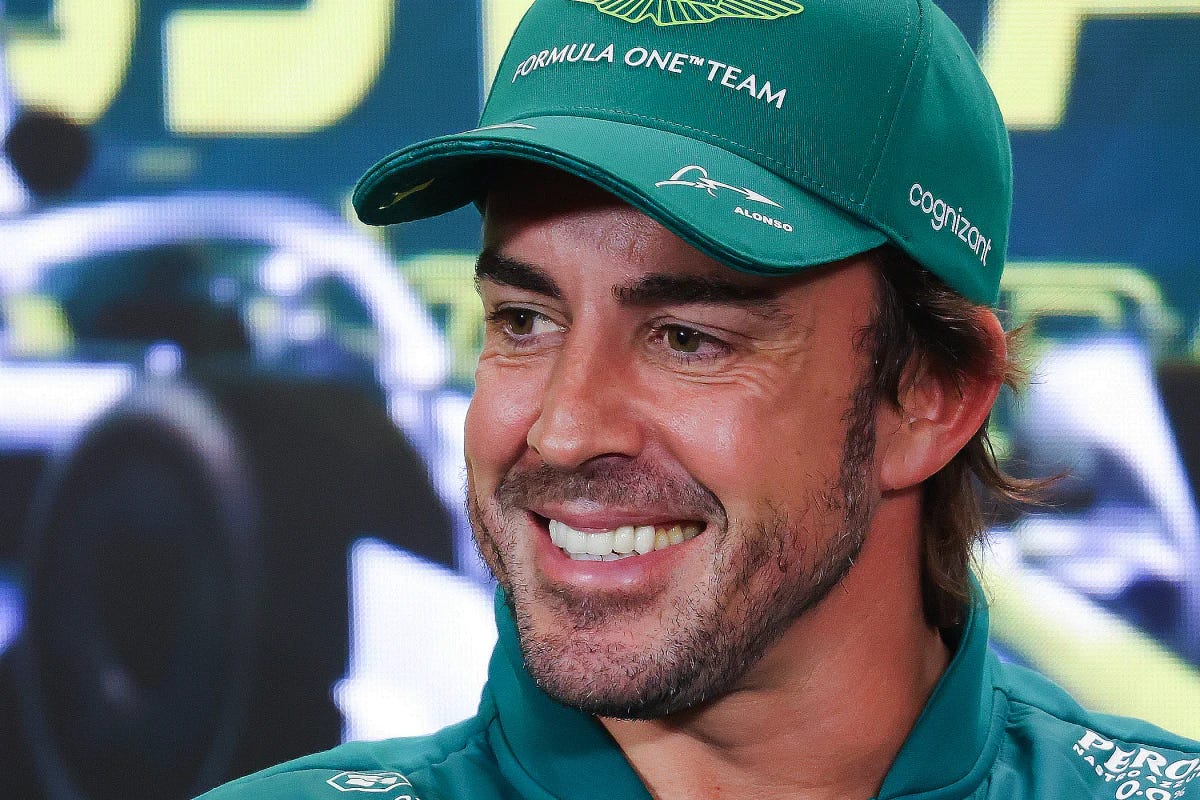
Sergio Perez and Cadillac were also almost winners. Perez crossed the line in 10th place and was pretty happy until…penalties were applied. After the penalty, Perez dropped to P15 and last, which gave Fernando Alonso and Aston Martin their very first point of the season. That must surely feel like a win for the long-suffering Aston Martin team. Perez and Cadillac deserved the point today. But Fernando and Aston really needed it.
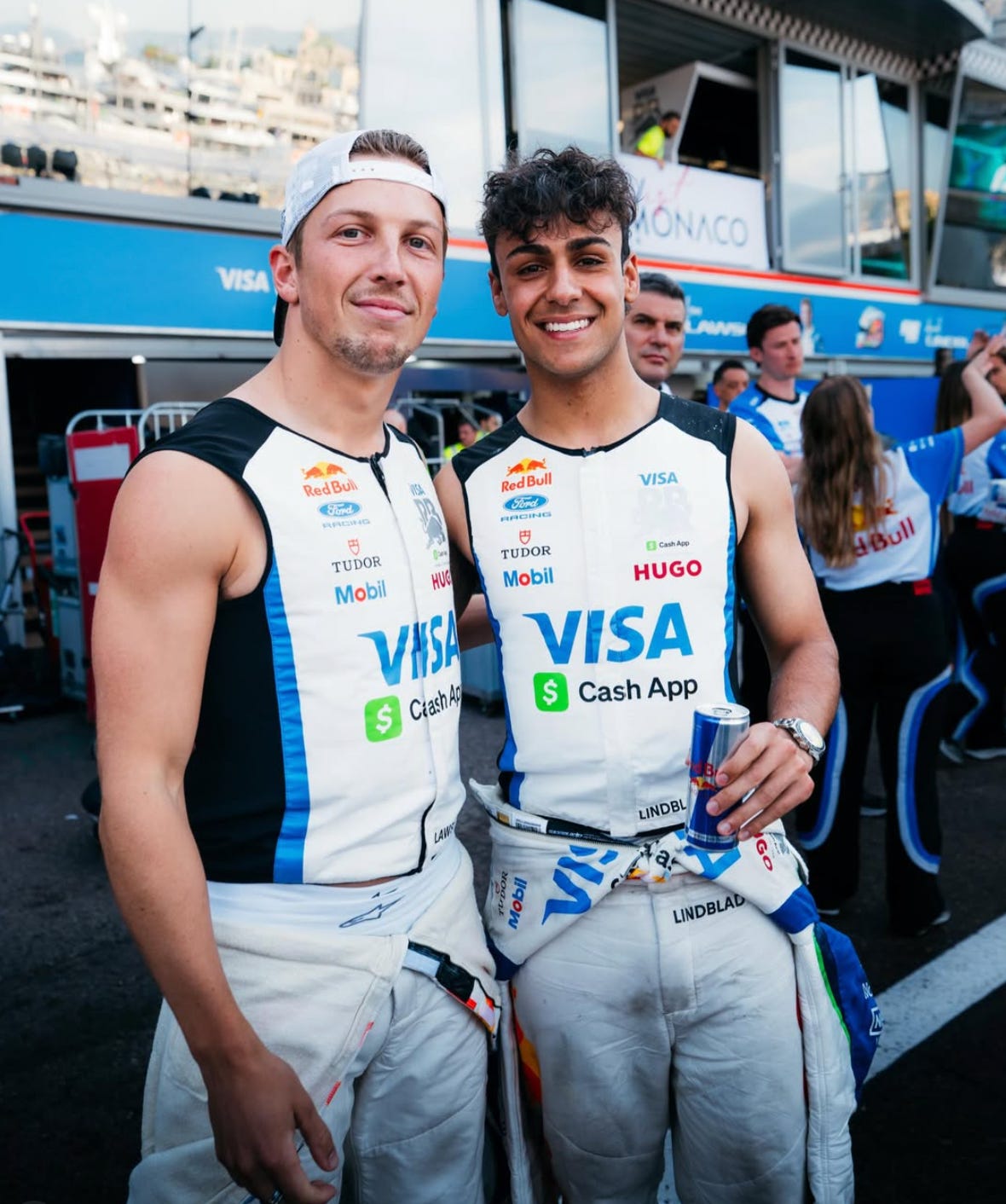
The lads at Racing Bulls had a great afternoon finishing 6th and 7th, Lawson leading Lindblad home. That’s a killer result for those guys, and they rightly took a dip in the harbor afterward to celebrate. In fact, everyone in the Red Bull family had a great day except for Max! Isack Hadjar, like Lewis, slipped the noose on a penalty and kept his podium. Isack’s second of the season. Not too shabby.
Amidst these encouraging results, Red Bull got themselves a bit of a backhanded compliment this weekend.
Just before the Grand Prix, the FIA announced their ADUO decision. We’ve written about this a couple of times this year. You’ll recall that ADUO is the upgrade and development scheme that would allow teams with engines that are deemed to be too far off the benchmark engine —engine here is the ICE and not any of the battery or energy management systems —to get some more development hours to bring their power units up to snuff; or at least try to. Well, the benchmark engine, says the FIA, is the Red Bull Powertrains Ford ICE. This must have come as a slap in the face on a weekend when Max couldn’t get off the starting line because of his engine, and Isack Hadjar was screaming like a maniac into his radio about his engine for the first part of the race.
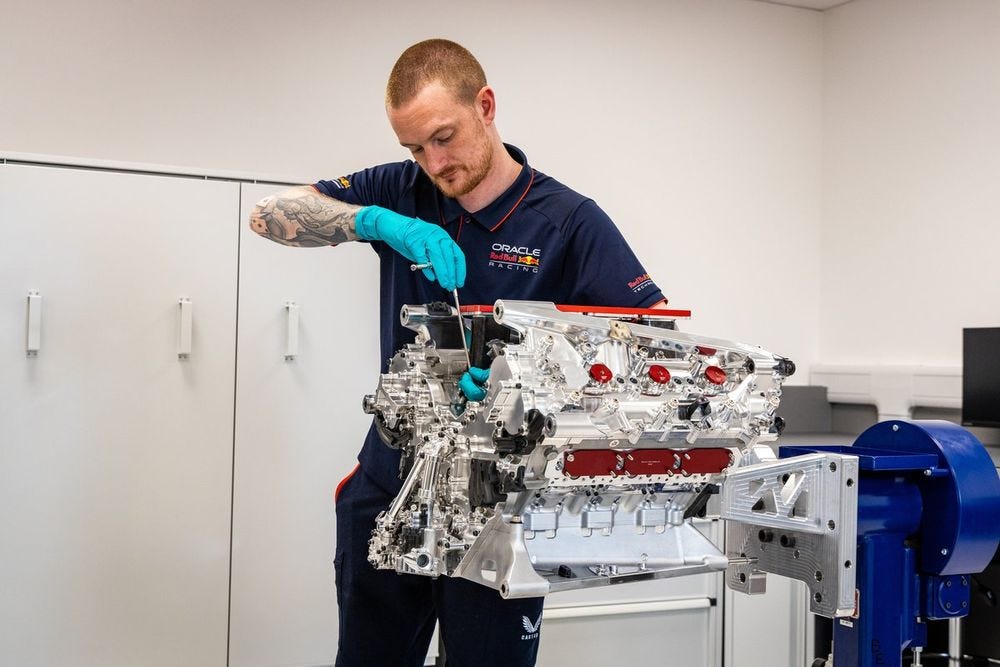
Once again, I am so impressed with what Red Bull has done here. I know it hasn’t resulted in the on-track performance they were hoping for, but a goddamn drinks company just built their very first engine ever, and it has been deemed the best ICE in Formula 1. That is just incredible. Yes, they are taking it on the chin at the moment, but there can be no doubt about the world-class operation that Red Bull is running in Formula 1. And because they are world-class, and because they’ve done something so amazing and so impressive, they get as a reward…a DNF for Max in Monaco, and their rivals, Mercedes and Ferrari, are getting more hours to upgrade their engines.
The unofficial engine ranking for the moment is Red Bull, with Mercedes at least 2% behind. Then Ferrari, Audi, and Honda are further behind, possibly in the 4% range set by the ADUO rules; they have all received the two upgrades, whereas Mercedes has received only one. These upgrade permissions also include allowances for additional spending and additional test bench hours. The idea that Mercedes is going to benefit from this when they clearly have the benchmark package, if not the benchmark ICE, has all the makings of a big political fight.
That doesn’t feel like either a win or a compliment to Red Bull, does it? Still, I’m super impressed by what Red Bull have done this year. Honor is due. Fairness? TBD.
As for the raft of pit lane speed violations we saw in Monaco, Scott Mitchell-Malm at The Race was able to find a tentative answer to the how’s and why’s of that bizarre twist. Five drivers were penalized for speeding in the Monaco pit lane. David Croft and Martin Brundle during the race expressed the same bafflement I think we all felt. Don’t they just hit a button on the steering wheel that takes the car right to the pit lane speed limit? Yes, yes they do. So was everyone just being ultra-aggressive in attacking the line? No.
So what happened here?
It turns out that the issue is with how car speed is measured. I always pictured some overworked Monegasque fellow with a cigarette hanging out of his mouth, lazily pointing a radar gun at incoming cars. Perhaps there was a time when that was how it was done.
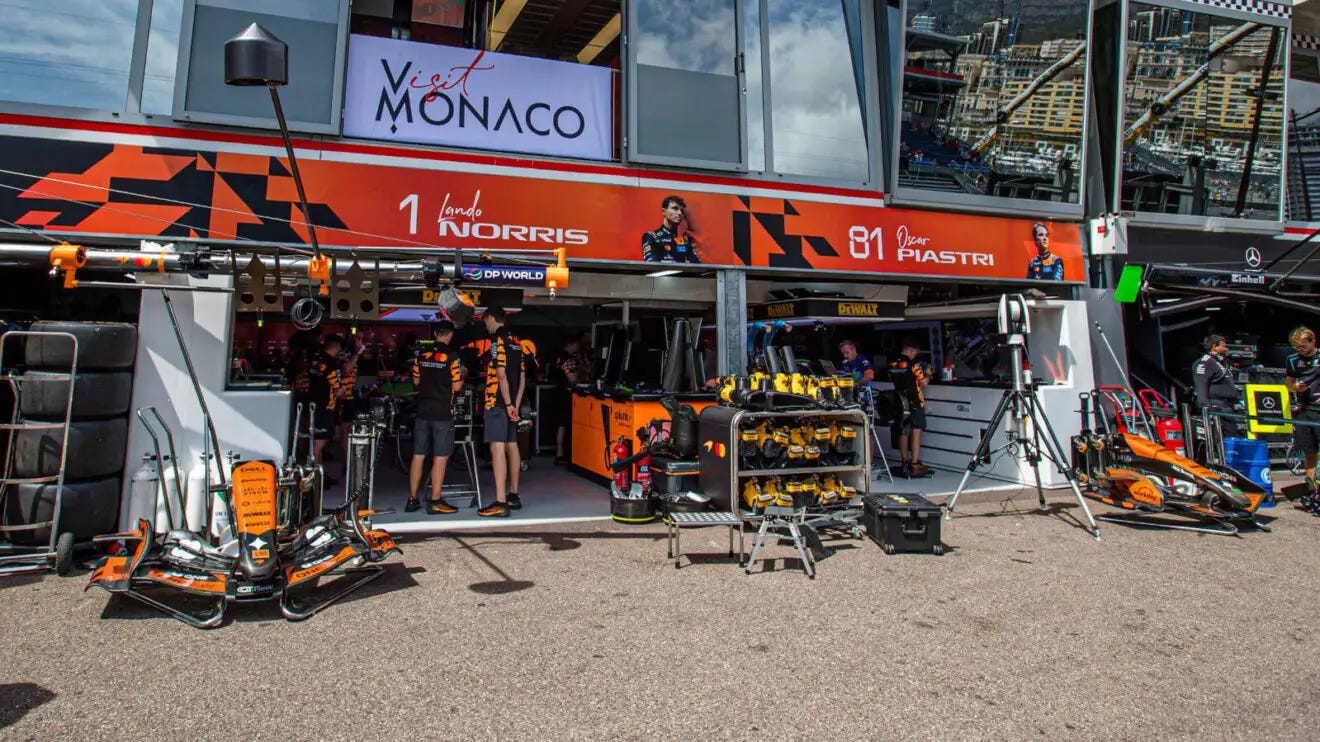
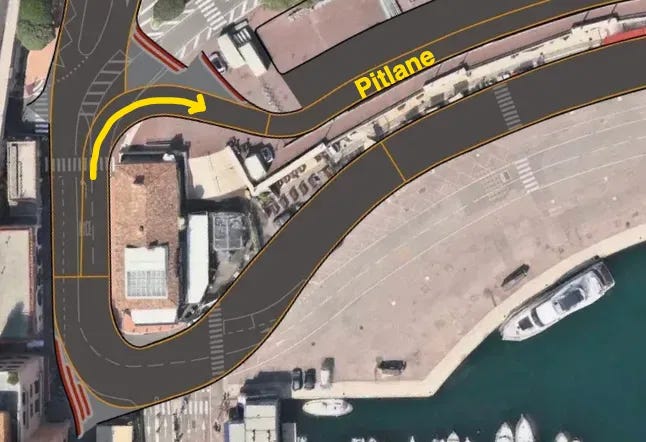
Monaco’s tight pit lane entrance was slightly reconfigured this year because there was an extra team on the grid, Cadillac, taking up the very limited space. Monaco’s pit lane and garages are famously small. Scott Mitchell-Malm writes in his article on this,
“This [the reconfigured pit lane] seems to have invited drivers to cut the white line that denotes the fast lane - which is done at both ends of the pits here.”
By the rules, nothing forbids cars from cutting this line. However, there is a consequence. Pitlane speed is measured using “electronic timing loops” and FIA transponders, not a radar gun. Here’s Mitchell-Malm again,
“The car will pass over multiple loops in the pitlane, and then the system calculates its speed based on the time taken to travel that distance.”
By cutting the line, drivers shortened the distance and thus covered that distance in less time. To the system, that’s speeding. Here’s Scott once again,
“So a car [traveling] at exactly 60km/h would complete the distance slightly too quickly for how it should be measured, and be very fractionally over the speed limit - hence the tiny margins seen in practice.”
There were four such incidents during practice sessions leading up to the Grand Prix. Drivers were also warned during the Grand Prix that something was going on there and that they should leave some margin. It didn’t matter. People like George Russell and Pierre Gasly paid a hefty price for this. George finished P14, and, as mentioned above, Pierre missed the podium.
Why does it seem that there are an infinite number of creative and interesting ways to make the Monaco Grand Prix worse but so few ways to turn it into an actual motor race?

Monaco, a necessary snooze fest before the glory of the European summer campaign. Spa, Monza and Silverstone on the horizon!
You are correct Monaco is no longer the great track or race it has been in the past